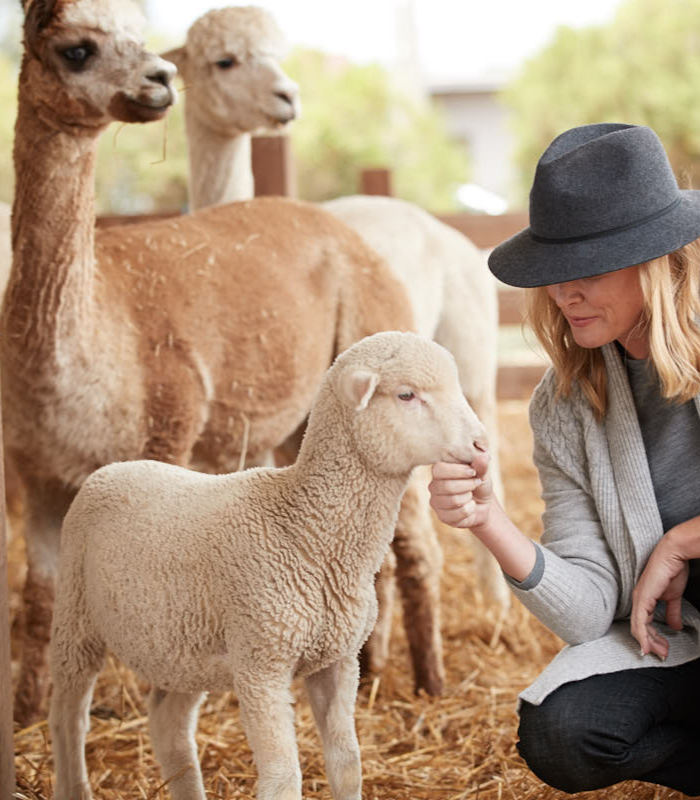


When most people picture Australian wool, they picture Merino: fine, soft and silky, destined for activewear and fashion. But Merino is only part of the story. Australia's wool clip also includes a hardworking, lofty, resilient fibre that is perfect for what most of us want on a cold night: a proper, heavy-duty, cosy blanket.
It's time to talk about Australian wool beyond Merino.
Merino Is the Headline, Not the Whole Story
Merino makes up roughly 80 to 82 per cent of the Australian wool clip. The remaining 18 to 20 per cent is non-Merino wool, mostly classified as crossbred. It comes from breeds such as Border Leicester, Romney and Downs, along with dual-purpose sheep raised for both meat and wool.
This fibre is coarser than Merino, typically 25 to 35 microns or more, and that is exactly the point. What makes it less suited to next-to-skin clothing makes it outstanding for home textiles. Different jobs call for different fibres, and for blankets, crossbred wool is a specialist.
Loft That Locks In the Warmth
The secret to a warm blanket is trapped air, and crossbred wool traps it brilliantly. Its larger fibre diameter and strong, pronounced crimp make each fibre behave like a tiny natural spring. Millions of microscopic air pockets form between the fibres, creating a thick, fluffy and insulating blanket.
The result is warmth without weight. A crossbred wool blanket wraps you in comfort that feels substantial but never suffocating. It holds body heat in while wool's natural moisture management keeps you from overheating.
Resilience That Lasts Decades
Fine Merino fibres are wonderfully flexible, but that flexibility means less structural body. Stronger crossbred fibres have excellent compressional resilience: they spring back after being squashed, folded or sat on.
For a blanket, that matters. Whether it's draped over the couch, piled onto a bed or packed away for summer, a crossbred wool blanket keeps its shape, volume and bounce. It resists flattening and matting, so it still feels plump and inviting years down the track.
Built to Resist Pilling
Finer apparel fibres are more prone to pilling- those little fuzzballs that form where fabric rubs. The sturdier structure of crossbred wool stands up to friction from tossing, turning and washing, so the surface stays smooth and tidy.
In a world of throwaway bedding, a blanket that looks good for generations is a real difference-maker. Durability is also sustainability: the longer a blanket lasts, the fewer replacements end up in landfill.
A Naturally Strong Animal Welfare Story
Mulesing, the practice used to help prevent flystrike, is associated with wrinkle-skinned Merino sheep. Non-Merino breeds generally have plainer, smoother bodies and do not require it.
For brands selling to welfare-conscious buyers at home and overseas, that is a compelling advantage. Sourcing non-Merino Australian wool allows a clear, positive story about how the animals are raised. As always, back this up with supply-chain documentation or accreditation so the claim holds up to scrutiny.
Clean by Nature: Wool and the PFAS Question
PFAS, often called "forever chemicals", are a growing concern in textiles because they are used in water-repellent and stain-resistant finishes. Regulation is tightening. Australia's industrial chemicals framework now prohibits the manufacture, import, export and intentional use of PFOS, PFOA and PFHxS from 1 July 2025, and the European Union is also moving to restrict PFAS in textiles.
For anyone making or importing woollen blankets, the practical message is simple: make sure no stain-guard, water-repellent or moth-proofing treatment introduces restricted substances. Testing for total organic fluorine is a useful screening tool, and it is more reliable than a basic total fluorine test because harmless inorganic fluorides from detergents or dyes can cause false positives.
Here is where wool shines. Unlike synthetic fleece blankets, which often rely on chemical finishes for water and stain resistance, wool brings its own natural defences:
-
Water and stain resistance: Wool's outer scale layer has a naturally water-repellent surface, so light spills tend to bead up rather than soak in immediately.
-
Flame resistance: Wool has a high ignition threshold and tends to self-extinguish, reducing the need for added flame retardants.
-
Odour resistance: Wool absorbs and holds odour molecules until washed, so it needs fewer antimicrobial finishes.
-
Low static: Because wool retains a little moisture, it attracts less static and dust than many synthetics.
-
No microplastics: Wool is a natural fibre that biodegrades, rather than shedding plastic fibres in the wash.
The key for makers is to keep the process clean. Avoid unnecessary performance coatings, ask suppliers for declarations, and consider independent certifications such as OEKO-TEX Standard 100, which sets limits on fluorinated chemicals and helps products meet the expectations of strict export markets.
Heritage Comfort, Not Performance Luxury
Merino has earned its reputation as the silky, high-performance fibre. Crossbred wool tells a different, equally appealing story: honest, tactile, reassuringly weighty comfort. It feels like a classic blanket that has kept Australian households warm for generations.
That heritage character is exactly what many shoppers want from a blanket. They are not looking for athletic gear. They want security, structure, and the simple pleasure of being wrapped up at home.
The finest Australian wool comes from Creswick
Non-Merino Australian wool delivers generous loft, lasting resilience, low pilling and a strong welfare narrative, all in a fibre that is naturally suited to staying free of the chemical finishes now under regulatory scrutiny.
The best product for the job is already growing in our paddocks. Choose the right fibre, keep the finishing clean, and let wool do what it has always done best.